In the Dalmarnock Village, damp and mould are merely the visible symptoms of a much deeper rot.
I just feel as if I’m going insane… I feel as if I’m just – like I’m screaming inside.
Wheatley Homes Glasgow Tenant
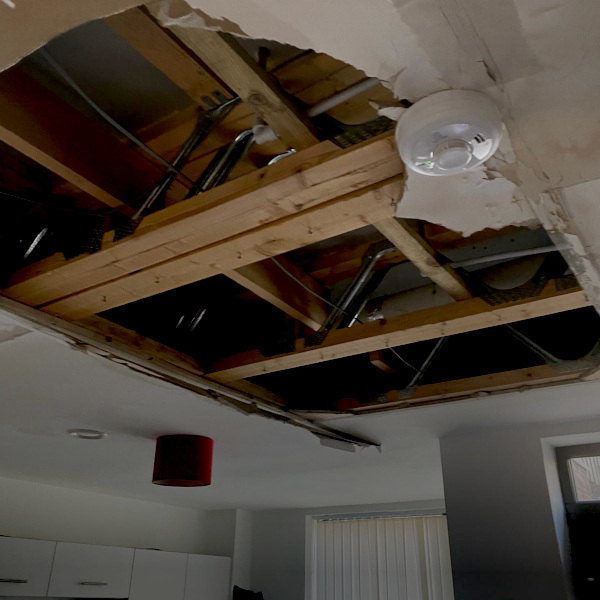
All my ceilings were in. I ended up in the hospital… it turns out I had Bell’s Palsy through stress.
Thenue Housing Association Tenant
My first flood… the ground floor was like puddles; water coming out the walls… fast forward to my next one… the full ceiling and the kitchen, the living room… the water was literally gushing, and I mean gushing through the ceilings.
West of Scotland Housing Association Tenant
The most damning testimony… did not concern physical disrepair – it was a resident telling me that he no longer felt like a human being.
Dr. James Patrick Ferns (Report author)
The Reality Inside Residents’ Homes
Dalmarnock Village was promoted as a flagship project and a lasting legacy of the 2014 Commonwealth Games. More than a decade later, a resident-driven campaign combining door-to-door surveys and oral history interviews has exposed a profound disconnect between the positive picture presented by housing providers and the reality documented inside residents’ homes.
Damp and mould are merely the visible symptoms of a much deeper rot. The evidence gathered from social housing tenants (Wheatley Homes Glasgow, Thenue Housing Association, and West of Scotland Housing Association) and owner-occupiers reveals that the problems cannot credibly be understood as isolated incidents. They are systemic.
The Crisis by the Numbers
- 96.6% of surveyed households had experienced at least one housing problem.
- 70.8% said housing problems had damaged their overall wellbeing and 62.9% reported a negative impact on their mental health.
- 64% reported leaks or flooding, 64% reported poor plumbing, 53.9% reported damp and 50.6% reported mould.
- 77.8% of surveyed Wheatley Homes Glasgow tenants, 50% of Thenue Housing Association tenants and 46.7% of West of Scotland Housing Association tenants reported housing issues lasting more than five years.
- 7.7% of social housing tenants reported that their housing issue had been resolved.
Explore the Report
The report examines the physical condition of homes in Dalmarnock Village, the consequences for residents’ health and wellbeing, the financial costs of prolonged disrepair, and the institutional failures that have allowed these problems to persist. It concludes with recommendations for addressing housing conditions, securing accountability and preventing similar failures in the future.
1. Report Introduction
Introduces the background to the Dalmarnock Village Housing Campaign, the purpose of the report and the research undertaken. Includes an explanation of the survey and oral history methodology.
2. Findings I: Material Conditions
Documents the physical condition of homes in Dalmarnock Village, including recurring flooding, defective plumbing and drainage, damp and mould, structural deterioration, poor insulation and ventilation failures. Drawing on survey findings and residents’ testimonies, this section documents the extent and persistence of these problems.
3. Findings II: Human Consequences
Examines the impact of prolonged housing disrepair on residents’ physical and mental health, including stress, anxiety, depression and declining wellbeing. Drawing on residents’ testimonies and survey findings, this section explores how persistent housing problems have affected everyday life, relationships, and residents’ sense of comfort, security and dignity within their own homes.
4. Findings III: Transfer of Costs
Explores the financial consequences of prolonged housing disrepair, including the costs of replacing damaged possessions, undertaking repairs and managing recurring housing problems. Drawing on survey findings and residents’ testimonies, this section explores how residents have been left to bear costs that should not fall upon them, while continuing to pay full rent for homes that are sometimes only partially usable.
5. Findings IV: Institutional Failure
Investigates how housing providers have responded to residents’ reports of disrepair, including repeated failures in diagnosis, repairs, communication and complaint handling. Drawing on survey findings and residents’ testimonies, this section documents experiences of victim-blaming, dismissive treatment and intimidation, and considers how these institutional failures have undermined residents’ trust and allowed housing problems to persist for years.
6. Recommendations
Sets out the report’s recommendations for addressing the housing failures documented in Dalmarnock Village, including an independent remediation programme, financial restitution and rent rebates for affected residents. It also outlines proposals for stronger regulation, independent enforcement and the democratisation of social housing in Scotland, with residents having meaningful power over decisions affecting their homes.
7. Oral History Quotes
This page brings together the quotations from Dalmarnock Village residents that appear throughout the report, A Much Deeper Rot. They are presented separately from the report’s findings and analysis, making it easier to read residents’ accounts in their own words.